 Image 1 of 5
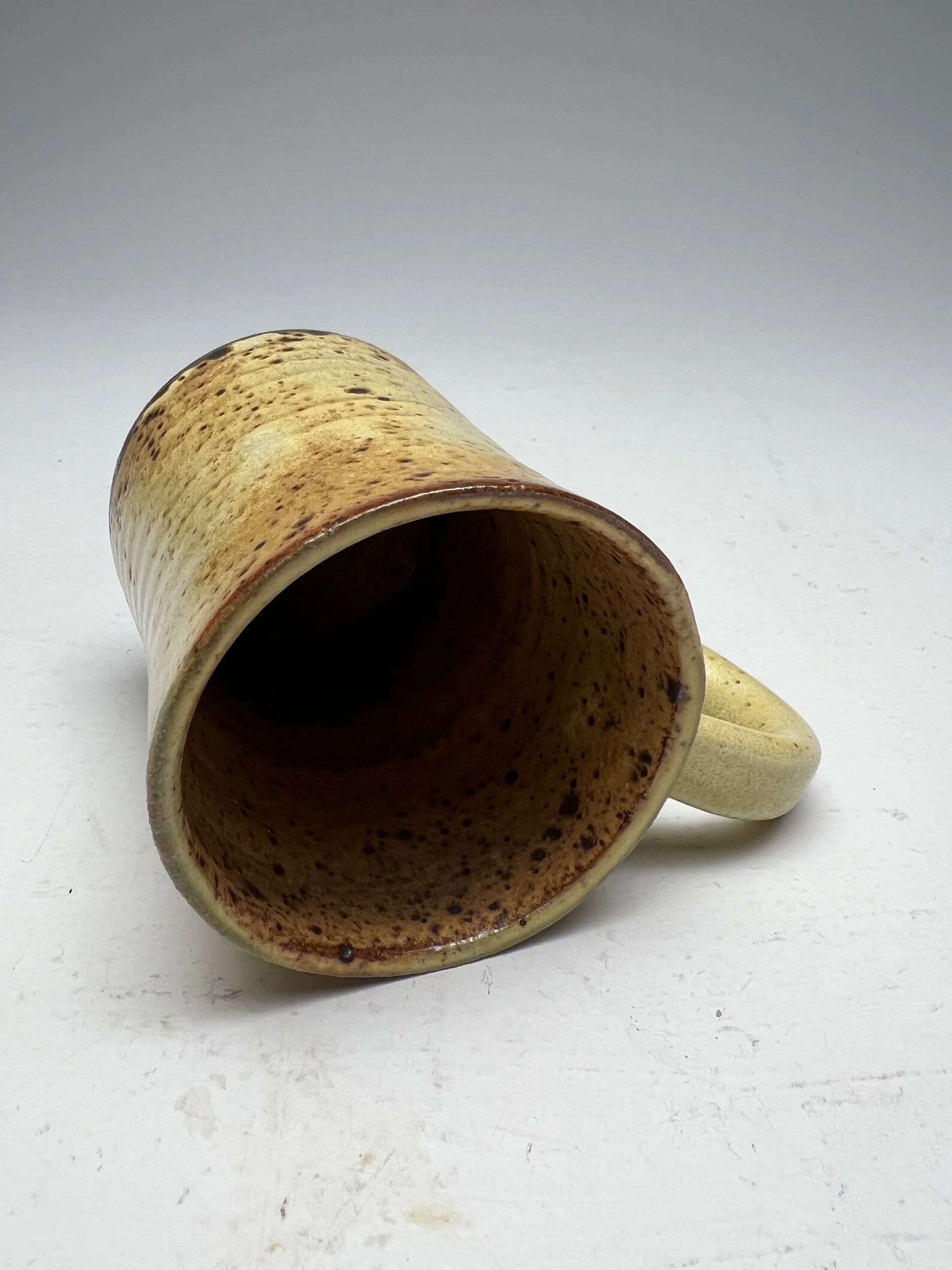 Image 2 of 5
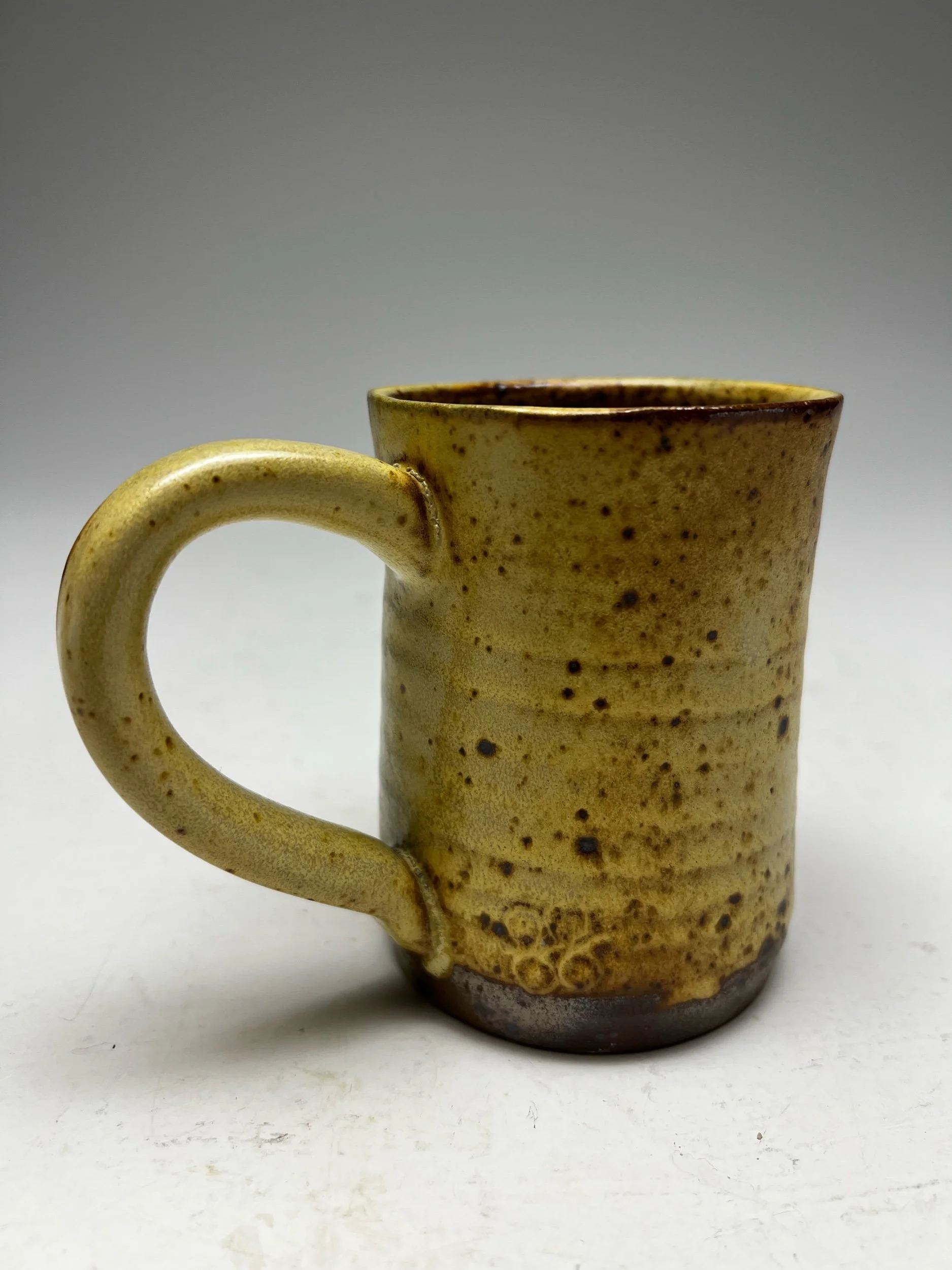 Image 3 of 5
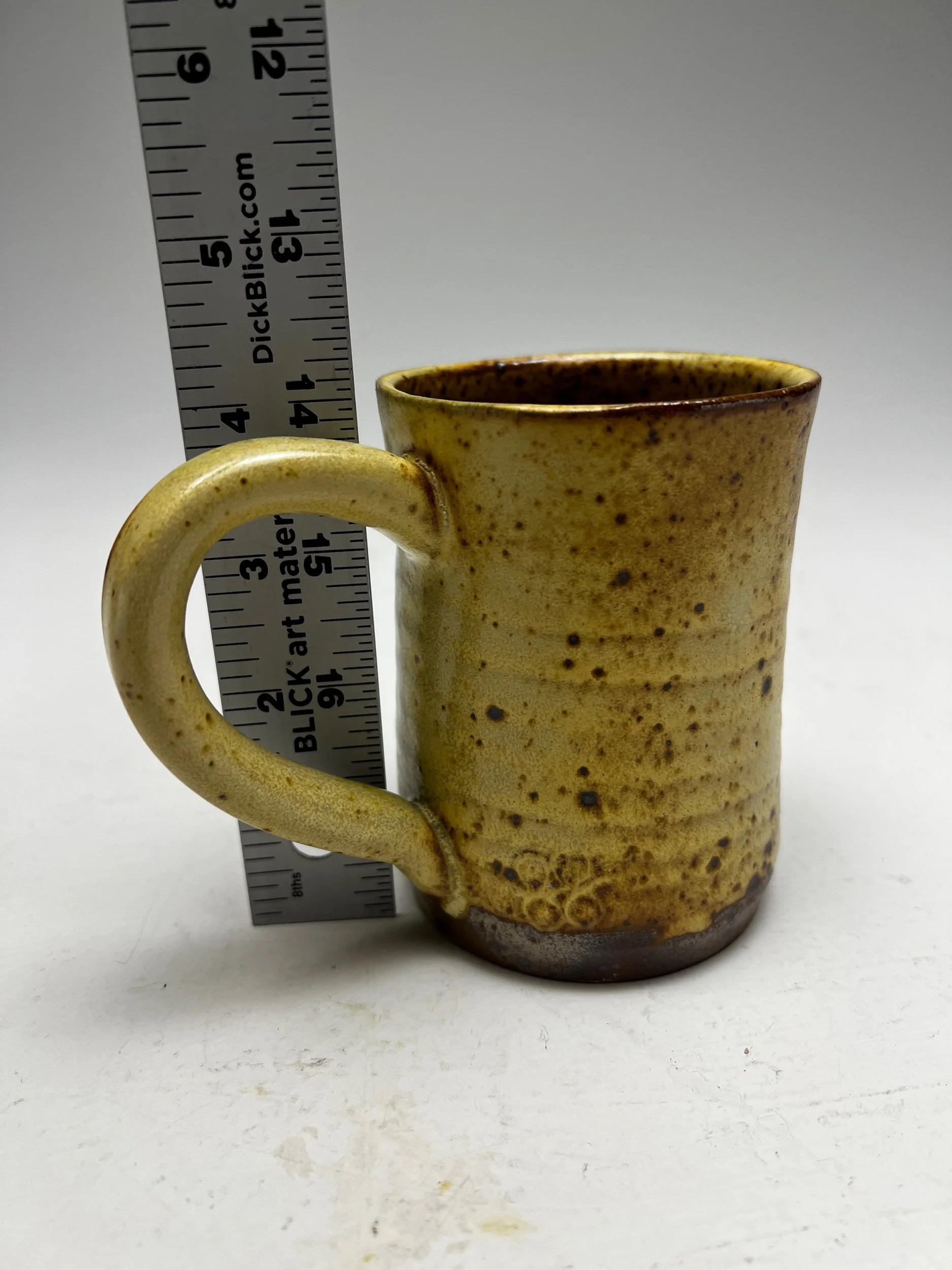 Image 4 of 5
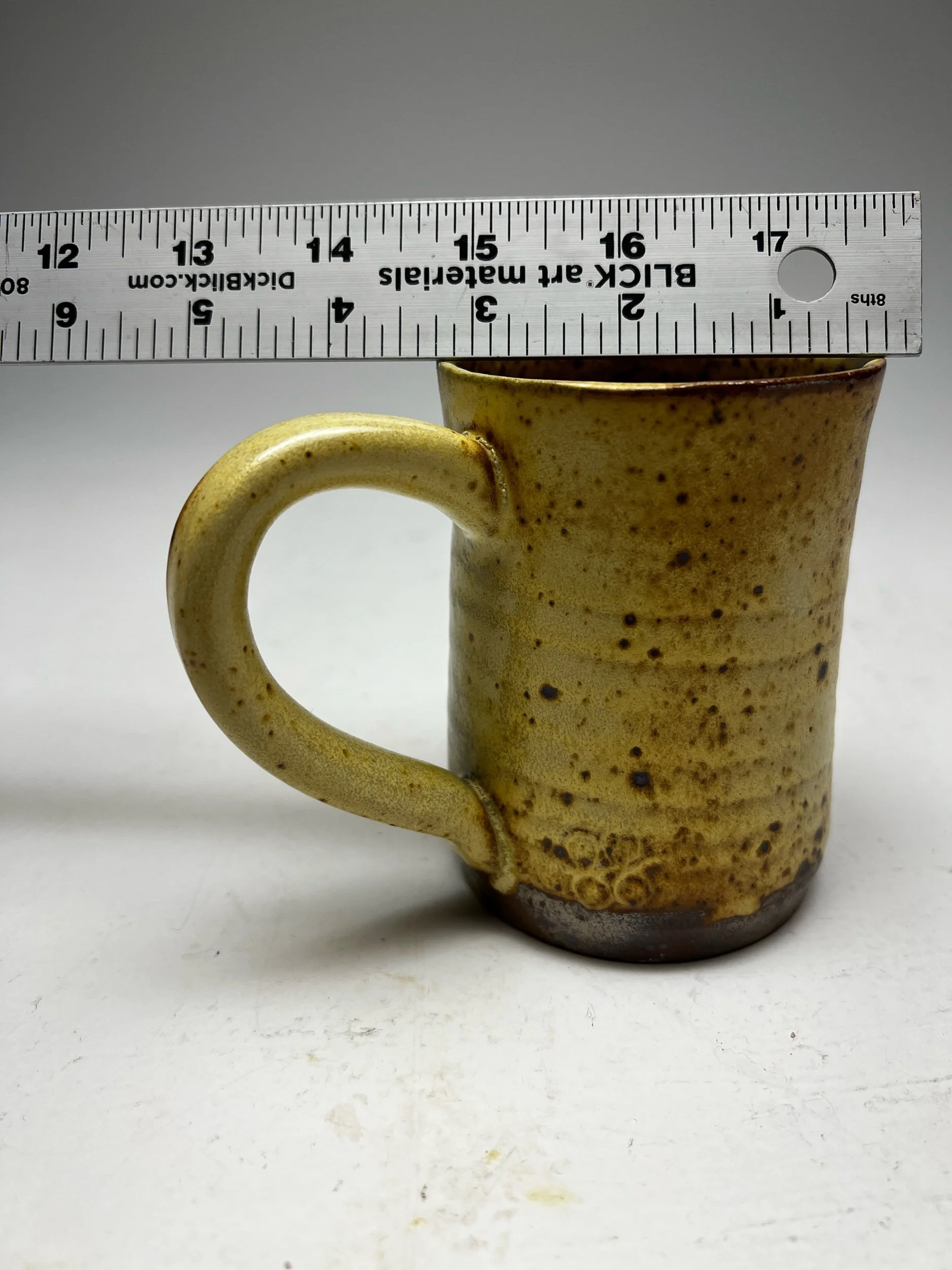 Image 5 of 5
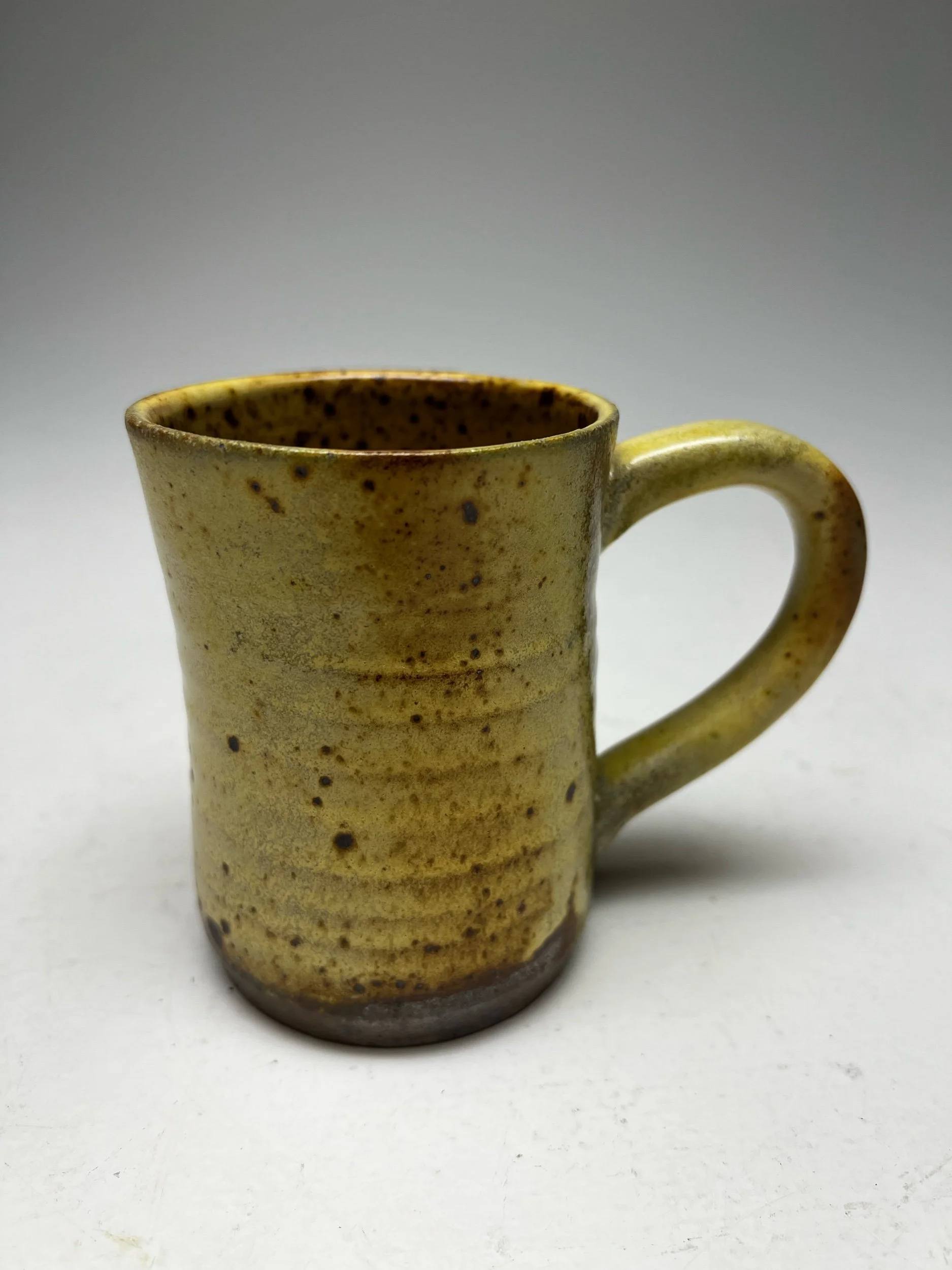
Specially fired in a traditional wood kiln with two classic wood kiln glaze. The flame path can be seen on the bottom, naturally colored by fire.
This is considered an art piece that has a functional purpose.
Perfect for keeping a little piece of the barn with you wherever you are.
Handmade from my own stoneware clay and glaze, made from scratch
Food-safe glaze
Microwave & Dishwasher safe (gentle cycle recommendation)
Unique - no two cups are exactly alike
Wood Kiln Fired
This piece was fired in a wood kiln, which is the oldest and first way humans ever created pottery. It requires hand cutting wood and tending to the logs, using appropriately a dozen trees’ worth of wood. Over the course of three days and two nights (24/7 surveillance with a team), the fire must be constantly stoked about every minute in order for the temperature to reach 2,300 degrees. You can witness the “wad” marks (the light brown, raw clay areas), creating a “flame path” where the vessel tells the story of where the fire touched it and the direction. The ash from the wood creates its own highly sought after glaze, and uniquely gives it a metallic sheen depending on how the flame reacted to other “flame paths.” Depending on how the vessel was placed in the kiln (each kiln has its own personality!), the fire itself creates beautiful and raw copper, gray, green, and orange tones.
Specially fired in a traditional wood kiln with two classic wood kiln glaze. The flame path can be seen on the bottom, naturally colored by fire.
This is considered an art piece that has a functional purpose.
Perfect for keeping a little piece of the barn with you wherever you are.
Handmade from my own stoneware clay and glaze, made from scratch
Food-safe glaze
Microwave & Dishwasher safe (gentle cycle recommendation)
Unique - no two cups are exactly alike
Wood Kiln Fired
This piece was fired in a wood kiln, which is the oldest and first way humans ever created pottery. It requires hand cutting wood and tending to the logs, using appropriately a dozen trees’ worth of wood. Over the course of three days and two nights (24/7 surveillance with a team), the fire must be constantly stoked about every minute in order for the temperature to reach 2,300 degrees. You can witness the “wad” marks (the light brown, raw clay areas), creating a “flame path” where the vessel tells the story of where the fire touched it and the direction. The ash from the wood creates its own highly sought after glaze, and uniquely gives it a metallic sheen depending on how the flame reacted to other “flame paths.” Depending on how the vessel was placed in the kiln (each kiln has its own personality!), the fire itself creates beautiful and raw copper, gray, green, and orange tones.